

Company
Transforming Mainstream Business in IB/IGB
Mainstream business becomes IB/IGB when the line is designed, on purpose, for a systemic result for the base of the pyramid.
IB/IGB is distinguished from mainstream business by that deliberate design. A mainstream line may trade off financial return against a social or environmental result, or it may emphasise the environmental result alone. An IB/IGB line is built so that the impact and the return reinforce each other.
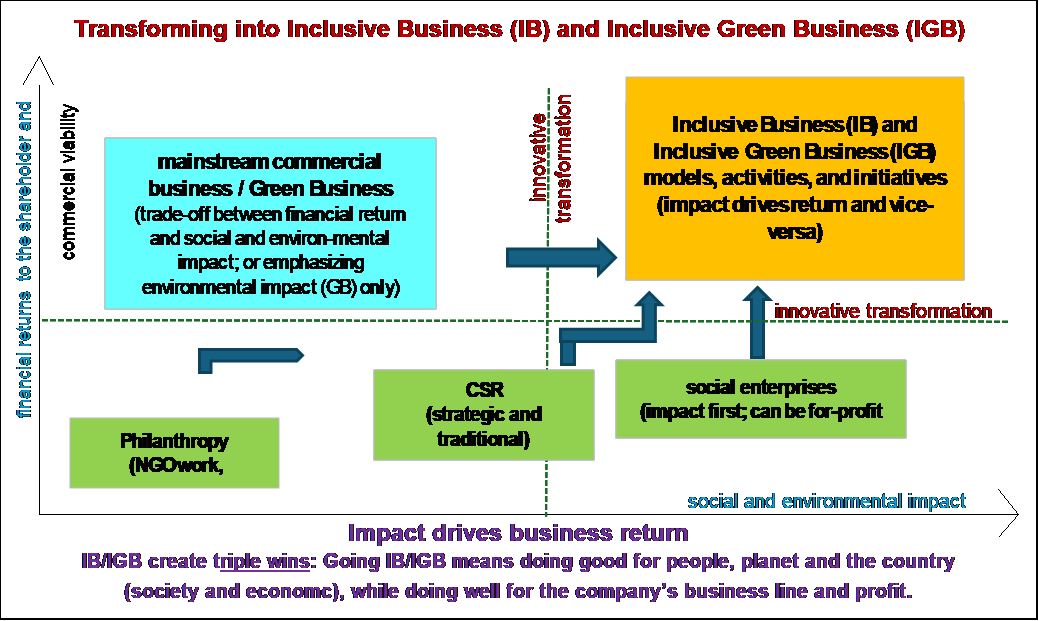
Commercial viability remains the precondition. On top of it, an income model has to raise income by more than the market rate, by more than the household earned three to five years earlier, and by more than other companies. A living-standards model has to be affordable, accessible and relevant, and has to create systemic change. The company types in Chart 4 place the IB/IGB model — a medium or large business line with large impact — next to mainstream business, so the difference in design is visible.
The portfolio so far is small beside the whole economy: an estimated 300 to 500 Ghanaian firms could qualify, out of about 700,000 enterprises. The landscape figures explain why the firms that do qualify still matter.