Business associations
AGI, GCYE, GNCCI, CAG, SEGh, others
Support Programs
A board oversees the initiative. A secretariat runs it. Three committees decide accreditation, coaching, and investment finance.
The dedicated institutional setup has five parts.
The oversight diagram gives the working composition. Government members of the board are drawn from MoF (alternate), MoTAI (chair) and GEA. Business associations are drawn from AGI (alternate) and GNCCI (chair). Impact investors are VCTF and IIGh. Business facilitators are GHN and GCYE. Three companies with IB/IGB business lines rotate annually, representing income, living standards, and environmental and climate results. Development partners are GIZ, EC and the World Bank, all rotating. Financing partners may also be reflected on the board.
The accreditation committee brings together AGI, GCYE, CAG and SEGh with MoTAI, GEA, MoFA and MESTI. The investment committee brings together VCTF, MoF, IIGh and GVCA (GIPC). The IDR coaching committee brings together GHN, GCYE, AGI, GEA, ESO, GCIC and SEGh. An IB Center sits in the arrangement beside the committees. The named people on the IDR committee are listed on the IDR-BCM page.
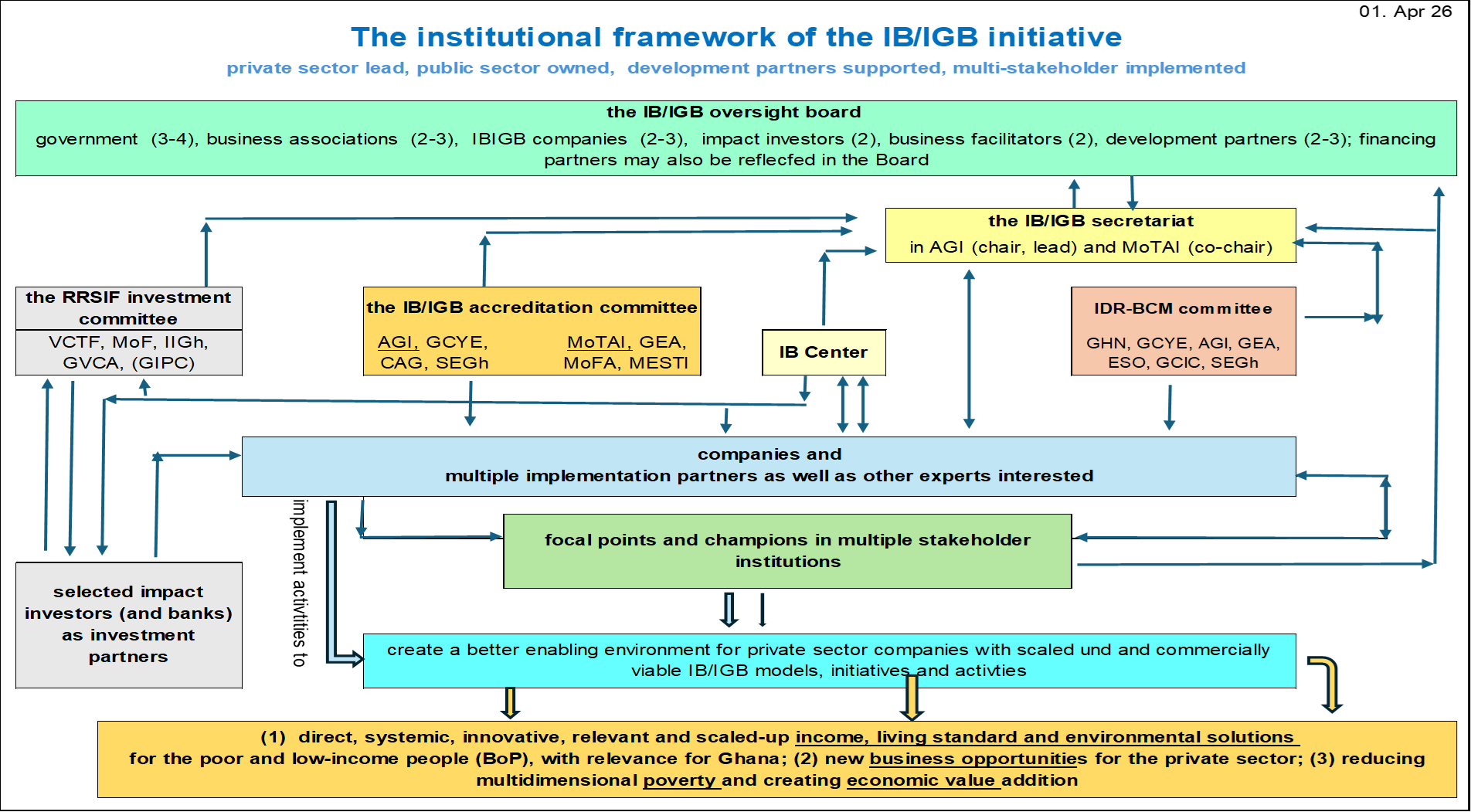
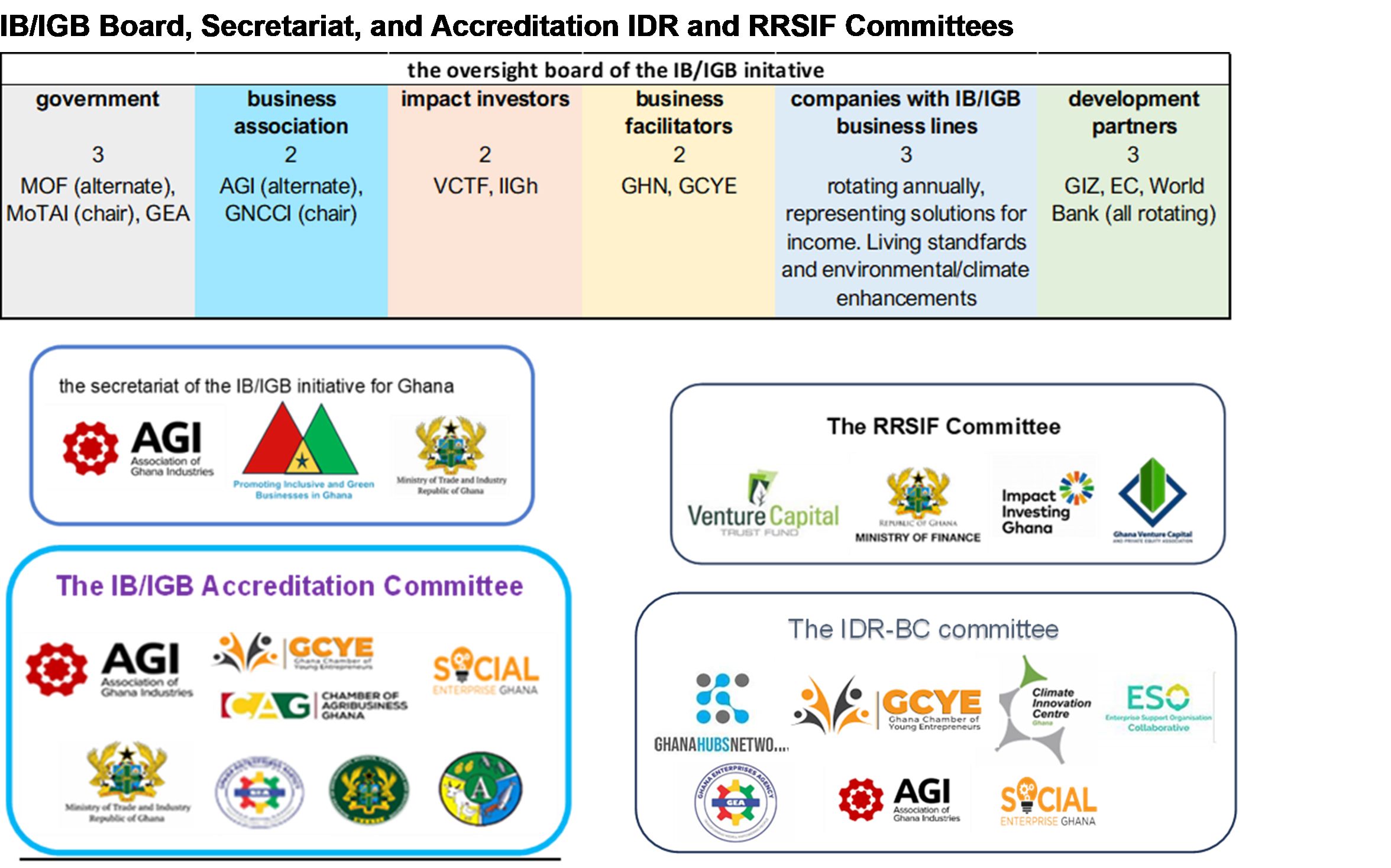
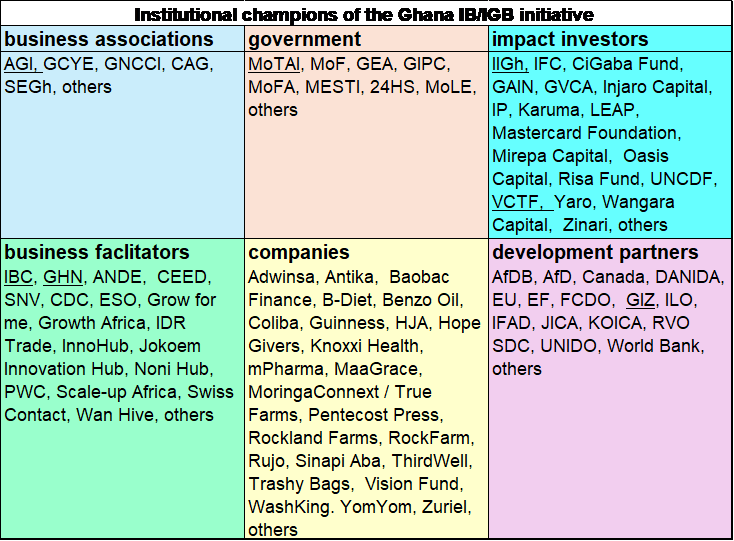
Chart 7 names the wider group of institutional champions. “Others” on the chart means the list is not closed.
AGI, GCYE, GNCCI, CAG, SEGh, others
MoTAI, MoF, GEA, GIPC, MoFA, MESTI, 24HS, MoLE, others
IIGh, IFC, CiGaba Fund, GAIN, GVCA, Injaro Capital, IP, Karuma, LEAP, Mastercard Foundation, Mirepa Capital, Oasis Capital, Risa Fund, UNCDF, VCTF, Yaro, Wangara Capital, Zinari, others
IBC, GHN, ANDE, CEED, SNV, CDC, ESO, Grow for me, Growth Africa, IDR Trade, InnoHub, Jokoem Innovation Hub, Noni Hub, PWC, Scale-up Africa, Swiss Contact, Wan Hive, others
Adwinsa, Antika, Baobac Finance, B-Diet, Benzo Oil, Coliba, Guinness, HJA, Hope Givers, Knoxxi Health, mPharma, MaaGrace, MoringaConnext / True Farms, Pentecost Press, Rockland Farms, RockFarm, Rujo, Sinapi Aba, ThirdWell, Trashy Bags, Vision Fund, WashKing, YomYom, Zuriel, others
AfDB, AfD, Canada, DANIDA, EU, EF, FCDO, GIZ, ILO, IFAD, JICA, KOICA, RVO, SDC, UNIDO, World Bank, others